
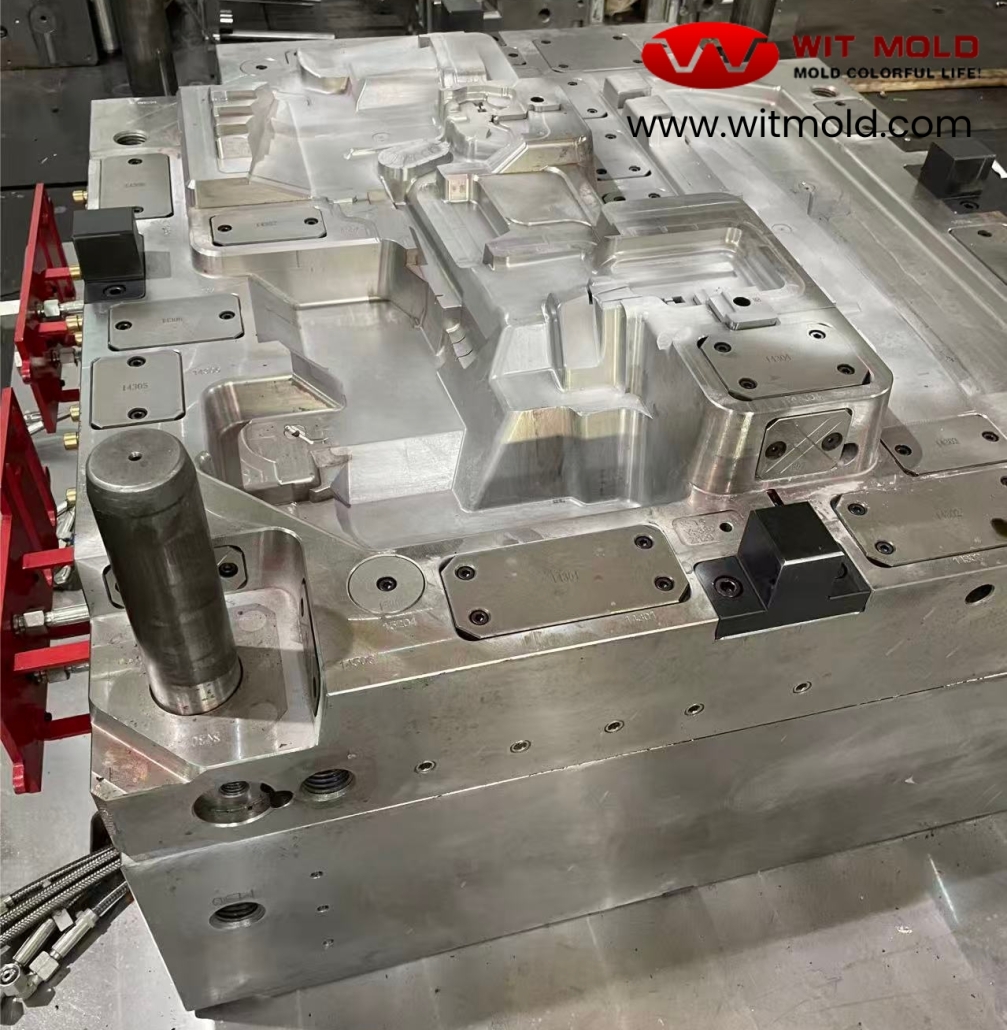
Behind Every Successful Plastic Part Is a Solid Tooling Foundation
In plastic injection molding, the final part quality is never separated from the mold behind it. A product may look simple from the outside, but its appearance, size, assembly performance, and production stability all depend on the tooling foundation.
At WIT MOLD, we believe that every successful plastic part starts with a reliable mold. Every insert, machining detail, tolerance control point, cooling channel, fitting surface, and assembly process can directly affect the final molded product.
That is why we do not see mold manufacturing as only cutting steel. We focus on building reliable manufacturing solutions that help customers turn product designs into stable mass production tools.
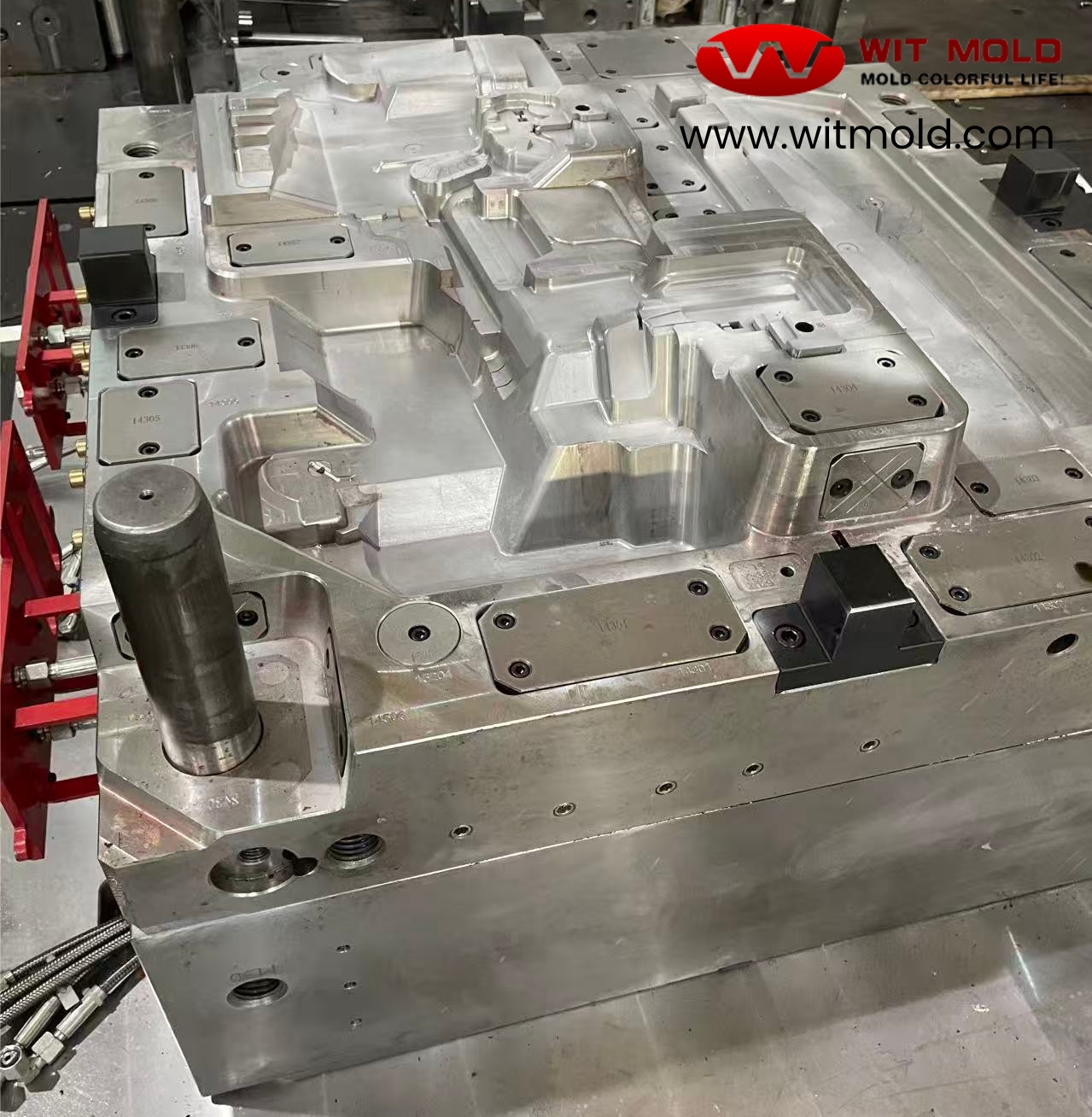
Why the Tooling Foundation Matters
For B2B buyers, a mold is not only a production tool. It is an asset that affects product launch, production efficiency, part quality, and long-term manufacturing cost.
If the mold foundation is weak, customers may face problems such as:
- Flash on parting lines
- Unstable dimensions
- Difficult part release
- Sink marks or deformation
- Poor surface appearance
- Long molding cycle time
- Frequent mold maintenance
- Assembly problems in finished products
- Higher defect rates during mass production
These issues may not always come from one obvious mistake. In many cases, they come from small details that were not properly controlled during mold design, machining, fitting, or validation.
A solid tooling foundation helps reduce these risks from the beginning.
Precision Inserts Support Stable Product Quality
Many plastic injection molds use inserts to form complex areas, improve machining feasibility, support maintenance, or control critical product features. Inserts may look like small components, but they often play an important role in final part quality.
For example, inserts can affect:
| Insert Area | Effect on Plastic Part |
|---|---|
| Rib and boss areas | Dimensional accuracy and strength |
| Clip or buckle areas | Assembly performance |
| Appearance surfaces | Surface quality and part consistency |
| Shut-off areas | Flash control |
| Replaceable wear areas | Mold maintenance convenience |
| Complex features | Machining accuracy and part repeatability |
If an insert is not machined or fitted correctly, the molded part may have dimensional deviation, flash, mismatch, surface marks, or assembly issues. For high precision plastic parts, insert control is especially important.
WIT MOLD pays attention to insert design, machining, fitting, inspection, and maintenance access to help the mold perform reliably in long-term production.
Machining Details Decide Mold Accuracy
Precision machining is one of the core foundations of mold quality. CNC machining, EDM, wire cutting, drilling, grinding, and polishing must all follow the mold design accurately.
For a custom plastic injection mold, small machining differences may affect how the mold opens, closes, seals, cools, and ejects parts.
Important machining details include:
- Core and cavity accuracy
- Insert pocket precision
- Slider and lifter fitting areas
- Parting surface contact
- Shut-off surface quality
- Cooling hole position
- Ejector pin alignment
- Surface finish requirements
- Component matching accuracy
These details are especially important for high precision molds, automotive molds, medical molds, industrial plastic molds, household appliance molds, and electronic product molds.
A mold can only produce stable plastic parts when the machined components fit together correctly.
Tolerance Control Is Critical for Functional Parts
Many plastic parts are not only used for appearance. They also need to fit, connect, seal, rotate, clip, or assemble with other components. This means tolerance control is critical.
For customers in automotive, medical, industrial, electronics, smart home, and appliance industries, a small dimensional problem may cause bigger downstream issues.
Tolerance control in mold manufacturing involves:
- Understanding critical dimensions from customer drawings
- Reviewing part function before mold design
- Considering plastic shrinkage and material behavior
- Controlling machining accuracy
- Checking sample dimensions after mold trial
- Adjusting the mold based on sample inspection results
At WIT MOLD, tolerance control is not only checked at the end. It starts from design review and continues through machining, assembly, mold trial, and sample validation.
Stable Cooling Improves Molding Performance
Cooling is one of the most important factors in injection molding performance. A well-designed cooling system helps improve cycle time, dimensional stability, surface quality, and part consistency.
Poor cooling may lead to:
- Warpage
- Shrinkage variation
- Uneven part dimensions
- Longer cycle time
- Hot spots in thick areas
- Reduced production efficiency
For complex plastic parts, cooling design needs to consider wall thickness, gate location, part geometry, steel layout, and production requirements.
A stable cooling system does not only help the mold run faster. It also helps the customer produce more consistent parts during mass production.
Complex Mold Structures Need Engineering Experience
Some plastic parts require simple mold structures, while others need sliders, lifters, inserts, hydraulic systems, hot runners, unscrewing mechanisms, or multi-cavity layouts.
For complex mold structures, engineering experience is essential.
WIT MOLD supports different types of custom mold projects, including:
- Custom plastic injection molds
- High precision molds
- Complex mold structures
- Insert molding tools
- Two shot injection molds
- Unscrewing molds
- High cavitation molds
- Gas assist molds
- Automotive molds
- Medical molds
- Industrial plastic molds
For these projects, the mold must be designed not only to make the part shape, but also to support stable movement, safe ejection, efficient cooling, reliable production, and easier maintenance.
Long Tool Lifetime Reduces Total Project Cost
Many buyers compare mold price during sourcing, but the real value of a mold depends on long-term performance.
A low-quality mold may create hidden costs after delivery, including:
- More trial modifications
- Longer production downtime
- Higher maintenance frequency
- More rejected plastic parts
- Slower production cycle
- Shorter mold service life
A well-built mold may require more detailed engineering and stricter manufacturing control, but it can help reduce total project cost over time.
WIT MOLD focuses on long tool lifetime by paying attention to mold steel selection, heat treatment, component fitting, wear areas, cooling performance, and maintenance convenience.
Fast Communication Helps Projects Move Smoothly
In custom mold projects, technical ability is important, but communication is also critical. A mold project usually involves drawings, design review, material selection, tolerance discussion, mold trial feedback, sample approval, and shipment arrangement.
Fast and clear communication helps reduce misunderstanding and avoid unnecessary delays.
WIT MOLD provides project support from early technical review to mold manufacturing, trial sampling, modification, final validation, and delivery. This helps customers better control project schedules and move from prototype or development stage to mass production more efficiently.
From Automotive to Medical and Industrial Applications
A solid tooling foundation is important across many industries.
WIT MOLD supports mold projects for applications such as:
- Automotive plastic components
- Automotive interior parts
- Automotive lighting-related parts
- Medical and healthcare products
- Household appliances
- Industrial plastic components
- Telecommunication equipment
- Smart home devices
- Consumer electronics
- Mobile and wearable devices
Different industries have different requirements, but the basic principle is the same: stable plastic part quality depends on reliable mold manufacturing.
What Buyers Should Prepare Before Starting a Mold Project
To help the mold manufacturer evaluate the project correctly, buyers should provide as much technical information as possible before quotation.
Recommended information includes:
- 2D drawings and 3D product files
- Plastic material requirements
- Critical dimensions and tolerance standards
- Surface finish requirements
- Mold life expectation
- Annual production volume
- Assembly or functional requirements
- Preferred injection machine information
- Special structure requirements, such as sliders, lifters, inserts, two-shot molding, or unscrewing
- Sample parts or prototype references, if available
Complete project information helps the engineering team design a mold that matches the customer’s real production needs.
Building Reliable Manufacturing Solutions With WIT MOLD
At WIT MOLD, our work does not stop at mold manufacturing. Our goal is to help customers build a reliable production foundation.
Every insert, every machined surface, every tolerance point, every cooling connection, and every fitting process matters. These details determine whether the final plastic part can be produced consistently, efficiently, and reliably.
For challenging projects, a strong tooling foundation is the key to successful mass production.