
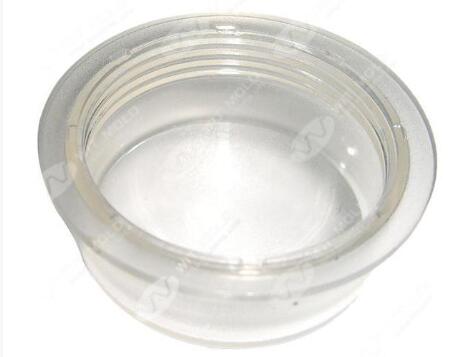
Unscrewing Molds for Threaded Plastic Parts Manufacturing
Threaded plastic components require accurate thread profiles, reliable fitting, and consistent manufacturing quality. For parts with deep or complex internal threads, conventional ejection methods may cause thread deformation, cracking, or dimensional inaccuracies.
Unscrewing molds solve these challenges by incorporating rotating mechanisms that release threaded components without forcing them off the mold core.
WIT Mold manufactures custom unscrewing injection molds for caps, closures, threaded fittings, and industrial plastic components. Our tooling solutions are developed according to thread geometry, material properties, and production requirements.
1. Why Threaded Plastic Parts Require Unscrewing Molds
Standard injection molds typically release finished plastic parts through straight mold opening and ejection. However, certain threaded components cannot be removed safely through this method.
Unscrewing molds use controlled rotational movement to disengage molded threads from the core.
They are particularly suitable when:
- Deep Internal Threads: Thread geometry prevents conventional straight-pull ejection.
- Rigid Plastic Materials: The molded part cannot flex sufficiently for safe thread stripping.
- Critical Thread Dimensions: Thread profiles must maintain accurate fitting and functional performance.
- Complex Thread Designs: Multiple turns or pronounced thread features require controlled release.
- Repeated Production: Automated unscrewing helps support consistent manufacturing cycles.
Not every threaded component needs an unscrewing mechanism. Some shallow or flexible thread designs can be stripped from the mold, depending on material properties and geometry.
2. How Unscrewing Injection Molds Work
Unlike conventional molds, unscrewing molds incorporate rotating cores or other coordinated mechanisms that release threaded features after the plastic has solidified.
The manufacturing process generally follows these steps:
- Injection: Molten plastic fills the cavity and forms the threaded geometry.
- Cooling: The material solidifies sufficiently to maintain its shape.
- Core Rotation: The unscrewing mechanism rotates to disengage the threaded core.
- Part Release: The molded component is separated from the tooling.
- Mold Reset: The mechanism returns to its starting position for the next cycle.
Depending on mold design, rotation may be driven by mechanical, hydraulic, or motorized systems.
Proper coordination between core rotation, part restraint, and ejection is essential for preventing thread damage.
3. Common Applications of Unscrewing Molds
Unscrewing injection molds are used for plastic components requiring functional threaded connections.
| Application | Typical Products | Manufacturing Requirement |
|---|---|---|
| Packaging | Bottle caps, closures, threaded lids | Consistent thread engagement |
| Industrial Equipment | Threaded fittings, connectors, plugs | Dimensional accuracy and reliable assembly |
| Plumbing Products | Sprinkler components, threaded adapters | Accurate thread profiles and material compatibility |
| Personal Care Packaging | Cosmetic closures, dispensing components | Thread consistency and surface appearance |
| Medical Equipment | Threaded housings and device components | Accurate fitting and project-specific quality requirements |
For example, a rigid plastic fitting with a deep internal thread may require mechanical unscrewing to preserve its thread profile during demolding.
4. Critical Design Considerations for Threaded Plastic Parts
The performance of an unscrewing mold depends on several technical factors.
| Design Factor | Key Consideration |
|---|---|
| Thread Diameter | Determines threaded core dimensions |
| Thread Pitch | Influences rotational movement and release distance |
| Thread Depth | Affects the required unscrewing travel |
| Plastic Material | Influences shrinkage, friction, and demolding behavior |
| Core Alignment | Supports consistent thread formation |
| Drive Mechanism | Determines rotational control and mechanical complexity |
| Production Volume | Influences cavity count and tooling durability |
Thread geometry should be evaluated during the initial design stage. Incorrect pitch, excessive friction, or insufficient rotational clearance can cause problems during core release.
WIT Mold’s design and engineering services include DFM analysis, mold flow analysis, and tooling design to identify manufacturing risks before mold construction.
5. Unscrewing Molds vs. Conventional Threaded Mold Designs
Different thread structures require different demolding methods.
| Mold Design | Suitable Conditions | Main Limitation |
|---|---|---|
| Straight-Pull Mold | Threads designed for direct release or suitable split construction | Not suitable for many internal thread geometries |
| Stripping Mold | Flexible materials and suitable shallow threads | Risk of deformation or thread damage |
| Collapsible Core Mold | Compatible internal undercut geometries | Core size and structural limitations |
| Unscrewing Mold | Deep, rigid, or dimensionally critical threads | Higher mechanical complexity and tooling cost |
Unscrewing tooling is particularly valuable when thread quality cannot be maintained through simpler ejection methods.
However, the additional rotating components require suitable maintenance, lubrication, and wear management.
6. What to Confirm Before Ordering an Unscrewing Mold
A complete technical specification helps ensure that the proposed mold design matches the intended product.
Before requesting a quotation, prepare:
- CAD Drawings: Include complete internal or external thread geometry.
- Thread Specifications: Provide diameter, pitch, thread length, and tolerances.
- Plastic Material: Specify the resin type and grade.
- Production Quantity: Confirm expected annual demand and target output.
- Functional Requirements: Define mating components and any sealing requirements.
- Mold Requirements: Identify cavity preferences, expected tool life, and delivery schedule.
For threaded components requiring sealing performance, sample approval should include appropriate assembly and functional testing.
Frequently Asked Questions
Are unscrewing molds necessary for all threaded plastic parts?
No. Some flexible plastic parts with shallow threads can be released through stripping or alternative mold structures. Unscrewing mechanisms are generally required when thread geometry or material rigidity prevents reliable conventional ejection.
Can unscrewing molds produce internal and external threads?
Yes. Unscrewing molds can accommodate suitable internal and external threaded features, although external threads may also be formed using split cavities or side-action mechanisms.
What affects the cost of an unscrewing injection mold?
Major cost factors include thread complexity, core dimensions, cavity count, rotating mechanisms, mold steel, expected production volume, and inspection requirements.
Custom Unscrewing Mold Manufacturing With WIT Mold
WIT Mold provides custom unscrewing mold design and manufacturing for threaded plastic components requiring controlled demolding and consistent thread quality.
With injection mold manufacturing experience since 2011, we support tooling projects from engineering analysis and mold design through manufacturing, assembly, and sample verification.
Contact WIT Mold to submit your threaded component drawings, material specifications, and production requirements for an unscrewing mold quotation.