
Precision Injection Molding vs Conventional Molding Comparison
Precision injection molding and conventional injection molding use similar manufacturing principles, but they differ in dimensional requirements, tooling complexity, process control, and production costs.
For OEM manufacturers, choosing between these methods depends on product functionality, tolerance requirements, and production volume. WIT Mold provides both precision injection molding and conventional plastic mold manufacturing solutions, helping customers develop tooling that matches their product specifications.
1. Key Differences Between Precision and Conventional Injection Molding
The main difference lies in the level of dimensional accuracy and process control required.
Precision injection molding focuses on maintaining demanding tolerances and consistent part dimensions, while conventional molding is generally suitable for products with standard manufacturing requirements.
| Comparison Factor | Precision Injection Molding | Conventional Injection Molding |
|---|---|---|
| Dimensional Accuracy | Tight tolerances and critical dimensions | General production tolerances |
| Mold Manufacturing | High-accuracy machining and fitting | Standard machining appropriate to specifications |
| Process Control | More stringent parameter monitoring | Standard process control |
| Inspection | Detailed measurement of critical features | Inspection based on product requirements |
| Tooling Cost | Generally higher | Generally lower |
| Typical Products | Precision gears, connectors, mechanical parts | Housings, covers, consumer products |
| Main Advantage | Dimensional consistency | Cost-effective manufacturing |
Neither method is universally better. The appropriate choice depends on the product’s actual performance requirements.
2. Differences in Mold Design and Manufacturing Accuracy
Precision injection molds require careful control of cavity dimensions, core alignment, parting surfaces, and moving components.
Small manufacturing deviations can affect the accuracy of components with narrow dimensional tolerances.
WIT Mold manufactures high precision molds with machining tolerances reaching ±0.002 mm for applicable mold components. This machining capability does not represent a universal tolerance for finished plastic parts.
Conventional molds also require accurate machining, but their manufacturing requirements are determined by the component’s specified dimensions and intended application.
For products without demanding tolerance requirements, conventional plastic molds can provide an economical manufacturing solution.
3. Differences in Process Control and Quality Inspection
Both molding methods require suitable processing conditions. However, precision applications generally demand tighter control of factors affecting dimensional repeatability.
Important parameters include:
- Melt Temperature: Affects material flow and processing consistency.
- Injection Pressure: Influences filling behavior and part dimensions.
- Packing Pressure: Helps compensate for material shrinkage.
- Mold Temperature: Influences cooling and dimensional stability.
- Cooling Time: Affects solidification, ejection, and potential deformation.
Precision projects may also require more detailed dimensional inspection and stricter acceptance criteria.
WIT Mold uses an integrated quality management system covering design, machining, mold assembly, and inspection.
4. Tooling Cost and Production Efficiency Comparison
Precision molds often involve higher initial investment because of demanding machining requirements, specialized components, and additional inspection.
However, precision tooling may provide long-term value when dimensional consistency is essential for assembly or product functionality.
| Cost Factor | Precision Molding | Conventional Molding |
|---|---|---|
| Initial Tooling Investment | Often higher | Often lower |
| Machining Requirements | More demanding | Based on standard specifications |
| Inspection Requirements | More detailed | Application-dependent |
| Production Cycle Time | Depends on product and process | Depends on product and process |
| Long-Term Value | Strong for critical-tolerance applications | Strong for general-purpose production |
Precision molding is not necessarily faster than conventional molding. Production efficiency depends on mold design, cavity count, plastic material, and processing conditions.
5. Which Injection Molding Method Is Right for Your Product?
The best choice depends on how dimensional variation affects the finished product.
Choose precision injection molding when:
- Parts require tight assembly tolerances.
- Components contain miniature or intricate features.
- Dimensional variation affects mechanical performance.
- Accurate alignment is essential for product functionality.
- Production requires consistent critical dimensions.
Choose conventional injection molding when:
- Products have general dimensional requirements.
- Components are primarily housings, covers, or non-critical structures.
- Standard tooling can meet functional requirements.
- Lower initial tooling investment is a priority.
- Additional precision would not improve product performance.
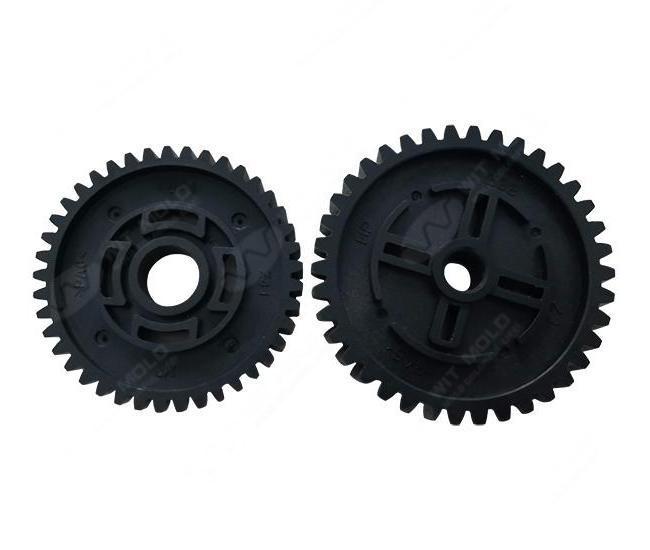
For example, a precision plastic gear may require demanding dimensional control, while a simple appliance cover may be manufactured effectively using conventional tooling.
Frequently Asked Questions
Is precision injection molding always more expensive?
Precision tooling often involves higher initial costs due to more demanding machining and inspection requirements. Actual costs depend on product geometry, material, tolerances, and production quantities.
Can conventional injection molding produce accurate parts?
Yes. Conventional injection molding can produce dimensionally accurate components within specified tolerances. Precision molding becomes necessary when product requirements exceed the capabilities of a conventional tooling and process approach.
Does precision injection molding guarantee zero defects?
No. Product quality also depends on material properties, processing conditions, cooling, mold maintenance, and inspection. Precision tooling supports dimensional consistency but cannot eliminate every potential defect.
Custom Injection Mold Manufacturing With WIT Mold
WIT Mold manufactures conventional and high precision injection molds for automotive, electronics, medical equipment, and industrial applications.
With mold manufacturing experience since 2011, we provide engineering review, mold design, manufacturing, mold trials, and sample verification based on customer requirements.
Contact WIT Mold to submit your CAD drawings, material specifications, critical tolerances, and production quantities for a custom injection mold quotation.