
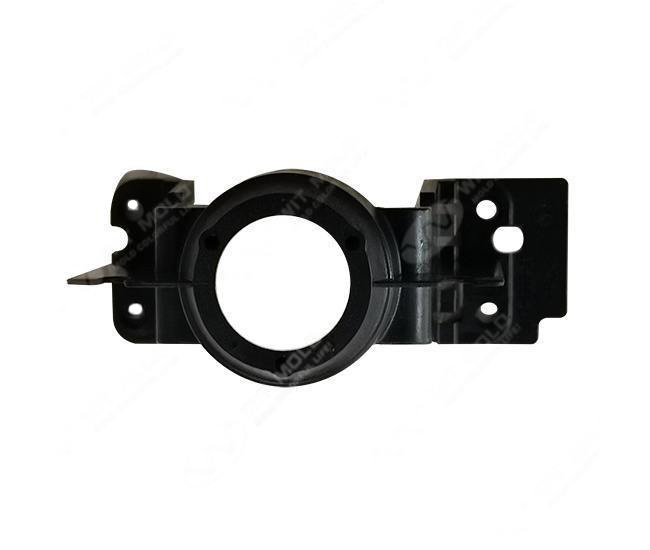
Precision Injection Molding Solutions for Complex Plastic Components
Manufacturing complex plastic components requires more than accurate mold dimensions. Thin walls, deep cavities, undercuts, intricate features, and tight assembly requirements can create challenges during injection molding.
WIT Mold provides precision injection molding solutions for complex plastic parts used in automotive, electronics, medical equipment, and industrial applications. Our engineering team develops custom precision molds to address challenging product geometries and production requirements.
1. Thin-Wall and Deep-Cavity Plastic Components
Thin walls and deep features can make injection molding difficult because molten plastic must fill narrow sections before solidifying. Poor filling or uneven cooling may cause short shots, deformation, or dimensional variation.
Effective tooling solutions include:
- Optimized Gate Locations: Improve material flow into thin and difficult-to-fill sections.
- Balanced Cooling Channels: Reduce uneven cooling and potential warpage.
- Suitable Draft Angles: Support reliable ejection from deep cavities.
- Material Selection: Match resin flow characteristics to the component geometry.
These considerations are particularly important for electronic housings, precision enclosures, and compact mechanical components.
2. Complex Undercuts and Internal Features
Plastic parts with side holes, snap-fits, internal grooves, or other undercuts often require specialized mold mechanisms.
Depending on the part geometry, sliders, lifters, or removable inserts may be incorporated into the mold structure.
| Complex Feature | Tooling Solution | Typical Application |
|---|---|---|
| Side Holes | Slider Mechanism | Electronic housings |
| Internal Undercuts | Angled Lifter | Snap-fit components |
| Complex Internal Cavities | Collapsible Core, where suitable | Specialized connectors |
| Molded Threads | Unscrewing Mechanism | Threaded plastic fittings |
| Detailed Internal Features | Precision Core Inserts | Mechanical components |
WIT Mold manufactures specialized mold structures, including unscrewing molds for components with threaded features requiring controlled release.
3. Intricate Details and Small Plastic Features
Miniature components often contain narrow slots, small holes, fine ribs, and closely spaced functional features.
These details require accurate mold machining and careful consideration of plastic flow and part strength.
Key manufacturing considerations include:
- Precision Machining: Produces detailed cavities, cores, and inserts.
- Parting Surface Accuracy: Helps minimize flash around critical features.
- Ejection Design: Reduces damage to delicate plastic structures.
- Feature Inspection: Verifies small dimensions against approved drawings.
WIT Mold uses precision machining and mold inspection to support detailed tooling requirements. For applicable mold components, machining tolerances can reach ±0.002 mm, although achievable molded-part tolerances depend on the specific product and material.
4. Tight-Tolerance Multi-Component Assemblies
Complex plastic products frequently consist of multiple parts that must fit together accurately.
Examples include sensor housings, electrical connectors, small gears, and mechanical assemblies. Dimensional deviations may affect alignment, movement, or fastening performance.
Precision tooling development should consider:
- Critical fitting dimensions and tolerance accumulation.
- Material shrinkage and dimensional stability.
- Component alignment and mating surfaces.
- Assembly testing using molded samples.
Functional dimensions should be identified during engineering review rather than relying only on general drawing tolerances.
5. Engineering Solutions for Complex Molded Parts
Different product challenges require different tooling approaches. The appropriate solution depends on geometry, resin selection, production volume, and functional requirements.
| Manufacturing Challenge | Potential Solution | Expected Benefit |
|---|---|---|
| Incomplete Filling | Gate and runner optimization | Improved filling consistency |
| Part Warpage | Cooling and wall-thickness optimization | Reduced dimensional distortion |
| Difficult Ejection | Sliders, lifters, or revised draft | Reliable part release |
| Dimensional Variation | Shrinkage compensation and process control | Improved repeatability |
| Delicate Features | Precision inserts and suitable ejection | Reduced feature damage |
| Complex Assembly | Critical dimension control and sample verification | More consistent component fit |
WIT Mold’s design and engineering services include DFM analysis, mold flow analysis, structural analysis, and tooling design to address manufacturing risks before mold construction.
6. Information Required for Complex Precision Molding Projects
Complete technical specifications allow manufacturers to identify potential tooling challenges and develop appropriate solutions.
Before requesting a quotation, prepare:
- 3D CAD Files: Complete component geometry and internal structures.
- 2D Drawings: Critical dimensions, tolerances, and inspection requirements.
- Plastic Material: Resin grade and relevant performance requirements.
- Assembly Details: Mating components and functional interfaces.
- Surface Finish: Cosmetic and functional surface specifications.
- Production Volume: Estimated quantities and tooling life expectations.
For complex components, sample validation should confirm both dimensional accuracy and functional performance before final mold acceptance.
Frequently Asked Questions
Can precision injection molding produce parts with complex undercuts?
Yes. Sliders, lifters, collapsible cores, and other specialized mechanisms can accommodate many undercut geometries. The appropriate mechanism depends on the part design and release direction.
What causes dimensional problems in complex injection molded parts?
Common causes include uneven shrinkage, poor cooling balance, unsuitable gate locations, part deformation, and unstable molding conditions.
Can several complex features be included in one injection mold?
Yes. Precision molds may combine sliders, lifters, inserts, and specialized ejection systems. Their feasibility depends on available mold space, structural strength, and mechanical compatibility.
Custom Precision Injection Molding With WIT Mold
WIT Mold manufactures high precision injection molds for complex plastic components requiring detailed structures, accurate assembly features, and reliable production performance.
Our services cover DFM analysis, precision mold design, manufacturing, mold trials, and sample verification based on customer specifications.
Contact WIT Mold to submit your CAD drawings, discuss complex component requirements, and request a precision injection mold quotation.