
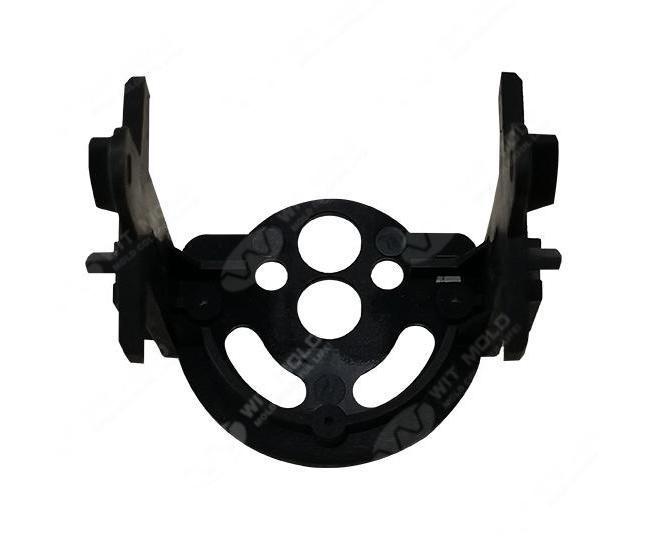
Key Differences Between Standard and High Precision Plastic Molds
Standard and high precision plastic molds are both used to manufacture injection molded components, but their construction requirements can differ significantly. Mold cavity accuracy, component fitting, steel selection, and inspection methods all influence the quality and consistency of finished parts.
WIT Mold manufactures both conventional tooling and high precision injection molds for OEM projects. Understanding the differences helps manufacturers specify the appropriate tooling without unnecessary investment.
1. Mold Machining Accuracy and Tolerance Requirements
The most important distinction is the accuracy required during mold manufacturing.
Standard plastic molds are manufactured according to the dimensional requirements of general-purpose components. High precision molds require stricter control of critical cavity dimensions, core positioning, and mold component alignment.
| Comparison | Standard Plastic Molds | High Precision Plastic Molds |
|---|---|---|
| Machining Accuracy | Based on general tooling requirements | More demanding dimensional control |
| Cavity Dimensions | Standard machining tolerances | Tight control of critical dimensions |
| Core Alignment | Suitable for normal assembly requirements | More precise positioning and fitting |
| Mold Inserts | Conventional fitting requirements | Closely controlled insert dimensions |
| Inspection | General dimensional verification | More detailed critical-feature measurement |
WIT Mold offers precision machining tolerances reaching ±0.002 mm for applicable mold components. This refers to mold manufacturing accuracy, not the guaranteed tolerance of finished plastic parts.
2. Differences in Mold Structure and Component Fitting
High precision molds often require more careful engineering of their internal components.
Small alignment errors between mold inserts, cores, and cavities may affect the dimensions or functionality of precision plastic parts.
Important structural considerations include:
- Core and Cavity Alignment: Accurate positioning helps maintain consistent molded features.
- Guide Pins and Bushings: Proper fitting supports repeatable mold closing and alignment.
- Precision Inserts: Removable inserts must maintain accurate positioning during production.
- Ejection Mechanisms: Controlled movement helps prevent deformation of delicate components.
- Parting Surfaces: Accurate fitting reduces flash around critical features.
Standard molds also require reliable assembly, but the necessary fitting accuracy depends on product specifications.
3. Mold Steel and Material Selection
Mold material selection affects durability, dimensional stability, machining performance, and maintenance requirements.
Standard molds may use different steel grades or aluminum tooling depending on production quantities and operating conditions.
High precision molds may require materials with suitable hardness, wear resistance, thermal stability, and machinability.
| Material Consideration | Why It Matters |
|---|---|
| Hardness | Helps resist deformation and wear |
| Dimensional Stability | Supports accurate component fitting |
| Wear Resistance | Protects critical mold surfaces |
| Machinability | Influences the ability to manufacture detailed features |
| Corrosion Resistance | May be necessary for specific materials or environments |
High precision does not automatically require the hardest or most expensive steel. The appropriate material depends on the plastic resin, expected mold life, and required dimensions.
4. Differences in Quality Inspection
Precision molds typically require more detailed measurement of critical features during manufacturing and assembly.
Inspection requirements should be determined by the approved tooling drawings and the functional importance of each dimension.
Common inspection considerations include:
- Cavity and core dimensional accuracy.
- Insert positioning and alignment.
- Flatness and fitting of parting surfaces.
- Moving component clearance.
- Molded sample dimensions and functional performance.
At WIT Mold, mold manufacturing includes engineering review, machining, assembly, and sample verification before final acceptance.
5. Tooling Cost and Manufacturing Complexity
High precision plastic molds generally involve additional machining time, fitting work, and dimensional inspection.
However, the final cost difference depends on the specific product rather than the precision designation alone.
| Cost Factor | Standard Mold | High Precision Mold |
|---|---|---|
| Machining | General tooling requirements | More demanding operations |
| Assembly | Standard fitting procedures | Additional alignment control |
| Inspection | Routine dimensional checks | Detailed critical-dimension inspection |
| Tooling Investment | Generally lower | Often higher |
| Best Value | General-purpose components | Tight-tolerance functional parts |
For components without demanding dimensional requirements, conventional plastic molds may offer a more economical solution.
6. When Is a High Precision Mold Necessary?
High precision tooling becomes particularly important when small manufacturing deviations could affect product function.
Typical examples include:
- Precision gears requiring accurate tooth geometry.
- Electronic connectors with closely spaced features.
- Small mechanical components requiring controlled clearances.
- Sensor housings with critical positioning features.
- Plastic assemblies requiring tight dimensional relationships.
For decorative covers, basic housings, and other components with wider tolerances, conventional tooling may be sufficient.
The final decision should be based on critical dimensions, material behavior, production quantity, and functional requirements.
Frequently Asked Questions
Are high precision molds always made from hardened steel?
No. Steel selection depends on mold structure, required durability, plastic material, and production volume. Hardened steel may be appropriate for demanding applications, but it is not universally required.
Does a high precision mold guarantee tighter plastic part tolerances?
No. Finished-part accuracy also depends on material shrinkage, product geometry, cooling, and injection molding conditions.
Can standard plastic molds be upgraded to precision molds?
Some improvements may be possible through machining corrections, component replacement, or structural modifications. However, major accuracy improvements may require extensive rebuilding or new tooling.
High Precision Plastic Mold Manufacturing With WIT Mold
WIT Mold provides custom high precision mold manufacturing for OEM customers requiring accurate cavity construction, detailed mold components, and reliable tooling performance.
With mold manufacturing experience since 2011, we support projects from tooling design and precision machining through assembly, mold trials, and sample approval.
Contact WIT Mold to submit your CAD drawings, specify critical tolerances, and request a precision plastic mold quotation.