
How Unscrewing Injection Molds Work in Production
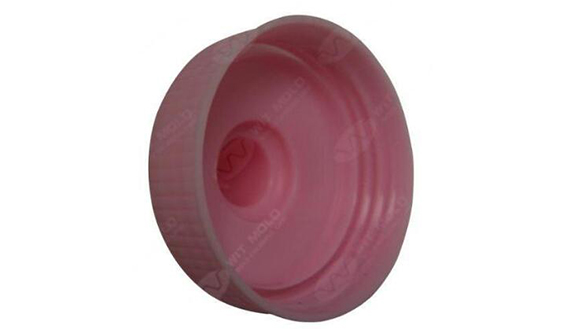
Unscrewing injection molds are designed to manufacture threaded plastic components that cannot be released reliably through conventional straight-pull ejection. Instead of forcing the finished part off the core, these molds use controlled rotational movement to disengage the molded threads.
WIT Mold manufactures unscrewing molds for threaded plastic caps, closures, fittings, and industrial components. Understanding the complete production cycle helps manufacturers evaluate thread quality, cycle time, and tooling reliability.
1. The Unscrewing Injection Molding Process
An unscrewing mold combines conventional injection molding with a mechanical thread-release operation.
The production cycle generally involves five stages:
| Production Stage | Mold Operation | Main Requirement |
|---|---|---|
| Injection | Molten plastic fills the mold cavity and threaded features | Complete filling |
| Cooling | Plastic solidifies around the threaded core | Sufficient dimensional stability |
| Core Unscrewing | The threaded core rotates and disengages from the plastic part | Controlled rotation and axial movement |
| Part Ejection | The finished component is released from the mold | Prevent thread damage |
| Mold Reset | The core and ejection mechanisms return to their molding positions | Accurate positioning for the next cycle |
The exact sequence depends on mold construction. In some designs, the threaded core retracts before mold opening, while other mechanisms coordinate unscrewing with additional mold movements.
2. How the Unscrewing Mechanism Operates
The rotating core is the main feature distinguishing unscrewing molds from conventional injection molds.
A typical mechanism includes a threaded core, transmission components, a drive system, and positioning elements.
WIT Mold has described a hydraulic rack-and-pinion mechanism in which a hydraulic cylinder drives a rack connected to gears. These gears rotate and retract the threaded core before the part is ejected.
Different drive arrangements may be selected according to product requirements.
| Drive System | Operating Principle | Main Consideration |
|---|---|---|
| Mechanical Drive | Gears, racks, or related mechanisms transmit rotation | Mechanical synchronization and wear |
| Hydraulic Drive | Hydraulic power operates the rotating mechanism | Pressure, movement, and timing control |
| Motor-Driven System | An electric motor drives core rotation | Torque, speed, and positioning control |
The drive system must provide sufficient rotational movement to release the entire thread without damaging the molded component.
3. Synchronizing Core Rotation and Part Ejection
Unscrewing and ejection must occur in the correct sequence.
If ejection begins before the threaded core has fully disengaged, the molded part may experience thread deformation, cracking, or stripping.
Critical controls include:
- Rotation Direction: Must match the thread hand and release requirements.
- Rotation Distance: Must provide enough movement to disengage the complete thread.
- Core Positioning: Maintains proper alignment during rotation and reset.
- Part Restraint: Prevents the component from rotating unintentionally with the core.
- Ejection Timing: Ensures the part is released only when the mold mechanism is ready.
For multi-cavity unscrewing molds, synchronized operation is particularly important because inconsistent release movement can affect individual cavities.
4. How Unscrewing Mechanisms Affect Production Cycle Time
Unlike conventional molds, unscrewing molds require an additional thread-release operation. This can increase the total molding cycle.
The production cycle depends on several factors:
- Thread Length and Pitch: Influence the number of core rotations required.
- Drive Speed: Determines how quickly the threads can be released safely.
- Cooling Time: Affects when unscrewing can begin without deforming the part.
- Cavity Count: Influences production output and mechanism complexity.
- Ejection and Reset: Must be coordinated with the remaining mold movements.
For higher-volume applications, cycle efficiency should be evaluated alongside thread quality and equipment reliability.
WIT Mold’s high-cavitation mold example includes a 64-cavity PP bottle-cap mold with internal thread tooling, demonstrating a production-oriented application of threaded plastic mold manufacturing.
5. Common Problems During Unscrewing Mold Production
Unscrewing molds contain rotating and moving components that require reliable mechanical coordination.
| Production Problem | Possible Cause | Recommended Check |
|---|---|---|
| Damaged Threads | Premature ejection or excessive release force | Core rotation and ejection timing |
| Incomplete Unscrewing | Insufficient rotation or travel | Thread pitch and mechanism stroke |
| Thread Dimension Variation | Shrinkage, core wear, or processing variation | Core dimensions and molded samples |
| Mechanism Jamming | Misalignment, wear, or inadequate lubrication | Transmission components and clearances |
| Extended Cycle Time | Slow unscrewing or reset movements | Drive speed and sequence optimization |
Identifying the actual cause during mold trials helps prevent repeated production interruptions.
6. Maintaining Reliable Unscrewing Mold Operation
Because unscrewing molds use gears, rotating cores, and other moving components, preventive maintenance is important for stable production.
Routine checks should include:
- Inspecting gears, racks, and threaded cores for wear.
- Checking lubrication and mechanical movement.
- Verifying hydraulic or motor-driven operation where applicable.
- Confirming correct core positioning and reset.
- Examining molded thread profiles for dimensional changes.
WIT Mold incorporates mold assembly checks, trial molding, and sample verification into its tooling manufacturing process.
Proper maintenance intervals should reflect the mold design, production frequency, and operating conditions.
Frequently Asked Questions
Why do unscrewing molds require additional cycle time?
The rotating core must disengage from the molded thread before the part can be safely released. The additional movement and reset operations may increase the molding cycle.
Can unscrewing molds operate automatically?
Yes. Unscrewing mechanisms can be integrated with injection molding machine operations to coordinate core rotation, ejection, and mold reset automatically.
What happens if the threaded core does not fully retract?
Incomplete core disengagement may damage the thread or prevent proper ejection. Core travel, mechanism timing, and positioning should be checked before production resumes.
Custom Unscrewing Mold Manufacturing With WIT Mold
WIT Mold manufactures custom unscrewing injection molds for threaded plastic components requiring accurate thread formation and controlled release.
Our services cover mold design, machining, assembly, trial molding, and sample verification. We develop tooling according to customer thread specifications, material requirements, and production quantities.
Contact WIT Mold to submit your threaded component drawings and request a custom unscrewing mold quotation.