
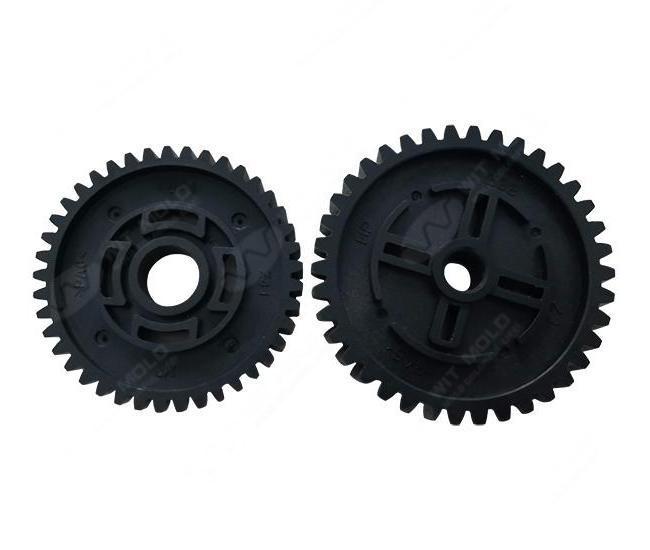
Applications That Require High Precision Injection Molding
High precision injection molding is essential for manufacturing plastic components that require tight dimensional tolerances, complex geometries, and consistent performance. Even small dimensional variations can affect assembly, mechanical movement, or product functionality in demanding applications.
WIT Mold provides precision injection molding and high-precision mold manufacturing solutions for automotive, medical, electronics, and industrial applications. With tooling experience since 2011, we manufacture precision molds according to customer drawings, material specifications, and production requirements.
1. Medical Devices and Healthcare Components
Medical equipment often contains small plastic components with detailed structures and strict dimensional requirements. Precision molding helps maintain consistent dimensions and reliable assembly.
Common applications include:
- Diagnostic Equipment Components: Plastic housings and internal components requiring accurate alignment.
- Medical Connectors: Small connection features with critical fitting dimensions.
- Device Enclosures: Plastic parts that must accommodate electronic or mechanical assemblies.
- Laboratory Equipment: Precision plastic components used in testing and measurement devices.
Medical applications may also require specific material, cleanliness, and regulatory controls, depending on the finished product. These requirements should be confirmed separately during project development.
2. Automotive Precision Components
Automotive systems rely on plastic components that must maintain dimensional consistency under repeated use and varying operating conditions.
Precision injection molding is particularly useful for:
- Sensor Housings: Components requiring accurate positioning and stable assembly.
- Electrical Connectors: Plastic bodies with precise contact spacing and retention features.
- Automotive Lighting: Lens holders and optical component supports requiring accurate alignment.
- Mechanical Components: Small gears, clips, and functional parts with demanding dimensional requirements.
WIT Mold manufactures injection molds for automotive lighting, interior components, and other automotive applications. Mold design considers part geometry, material behavior, and critical assembly dimensions.
3. Electronics and Telecommunication Equipment
Electronic products frequently contain compact components with thin walls, small openings, and closely spaced assembly features.
Typical applications include:
- Connector Housings: Require accurate pin positioning and cavity dimensions.
- Switch Components: Need consistent movement and reliable mechanical fitting.
- Communication Equipment: Precision plastic parts for connectors and internal assemblies.
- Electronic Enclosures: Require dimensional accuracy for PCB mounting and component installation.
For products involving small, intricate features, high precision molds support detailed cavity construction and controlled dimensional requirements.
4. Optical and Instrument Components
Optical devices and precision instruments often require accurate positioning of lenses, sensors, and internal components.
Even minor dimensional deviations may affect optical alignment or measurement performance.
Common applications include:
- Camera module frames and lens holders.
- Optical sensor housings.
- Instrument adjustment components.
- Precision mounting structures.
Material selection, mold surface quality, and shrinkage control are important for maintaining the required dimensional and functional performance.
5. Precision Gears and Mechanical Parts
Small plastic gears, bearing supports, and sliding components require consistent geometry to operate correctly.
Precision molding is used when part dimensions directly influence movement, friction, or assembly accuracy.
| Component | Critical Requirement | Common Material Options |
|---|---|---|
| Plastic Gears | Tooth geometry and dimensional consistency | POM, PA |
| Bearing Housings | Accurate bore dimensions and alignment | POM, PA |
| Sliding Components | Controlled dimensions and wear resistance | POM, PA |
| Mechanical Connectors | Consistent fitting and retention | ABS, PA, PC |
Material suitability depends on the operating environment, loads, and specific resin grade.
When Is High Precision Injection Molding Necessary?
Not every plastic component requires precision tooling. The need depends on product functionality and acceptable dimensional variation.
| Product Requirement | Why Precision Molding Matters |
|---|---|
| Tight Assembly Tolerances | Helps components fit together correctly |
| Small or Intricate Features | Supports detailed cavity geometry |
| Moving Mechanical Parts | Maintains accurate functional dimensions |
| Optical Alignment | Supports positioning of optical components |
| Multi-Part Assemblies | Reduces dimensional mismatch |
| High-Volume Precision Parts | Supports consistent production quality |
Precision injection molding requires coordinated control of mold machining, material shrinkage, processing conditions, and sample inspection.
Key Considerations Before Ordering Precision Injection Molds
Before starting a precision molding project, define the technical requirements that directly affect manufacturing accuracy.
- Critical Tolerances: Identify dimensions that influence assembly or functionality.
- Plastic Material: Specify the resin grade, shrinkage characteristics, and operating conditions.
- Part Geometry: Evaluate thin walls, small features, and potential deformation risks.
- Production Quantity: Determine suitable cavity configurations and tooling requirements.
- Inspection Standards: Establish measurement methods and acceptance criteria.
WIT Mold incorporates engineering review, precision machining, mold trials, and sample verification into its tooling development process.
Frequently Asked Questions
What industries commonly use precision injection molding?
Precision injection molding is commonly used in medical devices, automotive systems, electronics, telecommunications, optical equipment, and industrial mechanical components.
What is the difference between standard and high precision injection molding?
Standard injection molding supports general dimensional requirements, while high precision injection molding requires tighter control over mold dimensions, material shrinkage, processing stability, and part inspection.
What affects the accuracy of precision molded parts?
Major factors include mold machining accuracy, material properties, cavity design, cooling conditions, injection molding parameters, and part geometry.
High Precision Injection Mold Manufacturing With WIT Mold
WIT Mold manufactures custom precision injection molds for applications requiring detailed geometries, reliable assembly, and dimensional consistency. Our precision mold manufacturing capabilities include complex mold components, precision gears, and structural plastic parts.
We develop tooling based on customer CAD drawings, critical tolerances, plastic material specifications, and production requirements.
Contact WIT Mold to request a precision injection mold quotation and discuss the technical requirements of your next project.