
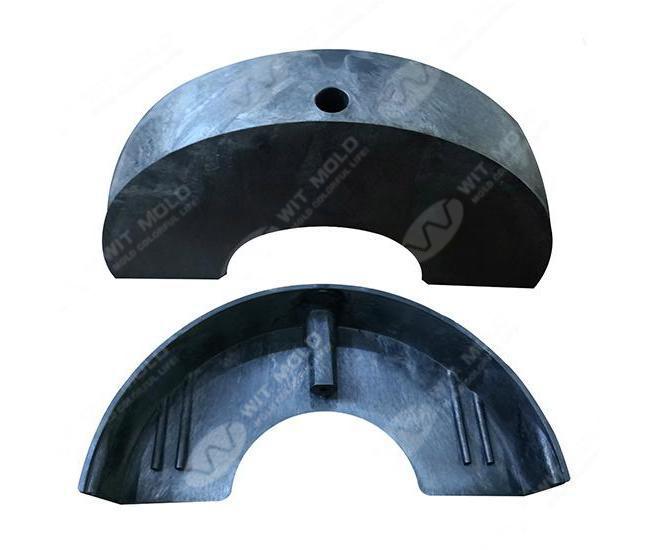
Structural Foam Molding vs Traditional Injection Molding
Structural foam molding and traditional injection molding are both used to manufacture thermoplastic components, but they differ in internal structure, molding pressure, tooling requirements, and finished-part appearance.
For large plastic housings, industrial panels, and structural components, choosing the appropriate process affects material consumption, production costs, and product performance.
WIT Mold provides structural foam molding and conventional injection mold manufacturing for OEM projects. Understanding their differences helps manufacturers select suitable tooling for large and complex plastic components.
1. Key Differences Between Structural Foam and Traditional Injection Molding
Traditional injection molding injects molten plastic into a mold cavity to produce a generally solid component. Structural foam molding introduces gas or a blowing agent into the plastic, creating a cellular core surrounded by a relatively dense outer skin.
| Comparison Factor | Structural Foam Molding | Traditional Injection Molding |
|---|---|---|
| Internal Structure | Cellular core with dense outer skin | Generally solid plastic |
| Molding Pressure | Typically lower in low-pressure structural foam processes | Generally higher |
| Part Size | Particularly suitable for large components | Suitable for small to large components |
| Wall Thickness | Favors relatively thick sections | Supports a wider range, including thin walls |
| Part Weight | Lower density in foamed regions | Solid material density |
| Surface Finish | May show swirl marks or surface irregularities | Often better cosmetic finish |
| Tooling Cost | Potentially lower for large low-pressure molds | Depends on pressure and tooling requirements |
| Cycle Time | May be longer for thick components | Depends on part geometry and cooling |
Neither process is universally better. The appropriate method depends on component specifications and manufacturing priorities.
2. Structural Performance and Material Distribution
Structural foam molding produces components with a cellular interior and relatively solid outer layers.
This construction can provide a useful stiffness-to-weight ratio for large products, including equipment housings and structural panels.
Structural foam molding is particularly suitable for:
- Large plastic components requiring relatively thick walls.
- Industrial equipment covers with integrated supporting features.
- Rigid panels where lower part density is beneficial.
- Components requiring stiffness without completely solid sections.
Traditional injection molding is often more appropriate for thin-walled components, small functional features, and parts requiring demanding dimensional tolerances.
However, mechanical strength depends on resin selection, wall thickness, loading conditions, and internal structure. Structural foam does not automatically provide greater strength than solid plastic.
3. Differences in Tooling and Production Costs
Low-pressure structural foam molding can reduce cavity pressure compared with conventional high-pressure injection molding.
For suitable large components, this may allow different tooling construction and potentially lower mold investment.
| Cost Factor | Structural Foam Molding | Traditional Injection Molding |
|---|---|---|
| Mold Construction | Lower-pressure tooling may be possible | Designed for specified injection pressures |
| Material Consumption | Reduced through cellular structure | Solid material in molded sections |
| Equipment Requirements | Specialized foam processing or blowing agents | Conventional injection molding equipment |
| Cooling Time | Influenced by thick walls and foaming | Influenced by geometry and wall thickness |
| Secondary Finishing | May require painting or surface treatment | Often fewer cosmetic finishing requirements |
WIT Mold manufactures conventional plastic molds alongside structural foam tooling, allowing mold construction to be matched to the intended product.
For purchasing decisions, total manufacturing cost should include tooling, resin consumption, cycle time, finishing, and production volume.
4. Surface Finish and Dimensional Accuracy
Surface appearance is one of the most important differences between these processes.
Structural foam molded parts may develop swirl marks or streaks because of gas expansion during molding. These characteristics may be acceptable for industrial components but unsuitable for products requiring high-gloss cosmetic surfaces.
Traditional injection molding often provides greater flexibility for achieving smooth, detailed surfaces directly from the mold.
Important considerations include:
- Cosmetic Requirements: Visible structural foam surfaces may require painting or finishing.
- Dimensional Tolerances: Conventional injection molding may be preferable for demanding precision features.
- Wall Thickness: Structural foam generally requires sufficient thickness for cellular development.
- Part Geometry: Fine details and intricate thin sections may be better suited to conventional tooling.
WIT Mold supports structural foam molded components such as plastic covers, panels, handles, and equipment enclosures.
5. Which Process Is Better for Large Plastic Components?
The following examples illustrate how manufacturing requirements influence process selection.
| Product Application | Recommended Process | Main Reason |
|---|---|---|
| Industrial Machine Housing | Structural foam molding | Large size and structural rigidity |
| Plastic Pallet | Structural foam molding, where load requirements permit | Thick sections and material efficiency |
| Large Equipment Panel | Structural foam or conventional molding | Depends on appearance and dimensional requirements |
| Thin-Walled Electronic Housing | Traditional injection molding | Thin sections and detailed features |
| Precision Plastic Connector | Traditional injection molding | Critical dimensions and fine geometry |
| Large Structural Cover | Structural foam molding | Integrated supporting features |
Structural foam molding is particularly attractive for large, thick-walled components where stiffness and material efficiency matter more than a high-gloss finish.
Traditional injection molding remains a strong choice for detailed components with tighter tolerances or demanding appearance requirements.
6. What to Confirm Before Choosing a Molding Process
Before deciding between structural foam and conventional injection molding, prepare the technical requirements that affect manufacturing feasibility.
- Part Dimensions: Confirm overall size, wall thickness, and structural features.
- Material Requirements: Specify the resin grade and mechanical properties.
- Surface Finish: Define cosmetic requirements and acceptable secondary finishing.
- Mechanical Loads: Identify stiffness, impact, and load-bearing requirements.
- Dimensional Tolerances: Highlight critical assembly features.
- Production Volume: Provide estimated annual demand for tooling cost evaluation.
WIT Mold develops custom tooling according to product drawings, material requirements, and production specifications.
Frequently Asked Questions
Is structural foam molding cheaper than traditional injection molding?
It can be more economical for large, thick-walled components because low-pressure processing may reduce tooling requirements and cellular structures can reduce resin consumption. Actual costs depend on mold complexity, production volume, cycle time, and finishing requirements.
Is structural foam molding stronger than conventional injection molding?
Not necessarily. Structural foam can offer useful stiffness relative to its weight, but solid injection molded parts may provide higher strength for the same geometry and material. Mechanical performance must be evaluated for each design.
Can structural foam molding produce smooth surfaces?
Structural foam parts may have visible swirl marks or surface irregularities. Painting, filling, or other secondary finishing operations may be required for demanding cosmetic applications.
Custom Structural Foam and Injection Mold Manufacturing With WIT Mold
WIT Mold manufactures custom structural foam molds and conventional injection molds for industrial equipment, commercial products, and large plastic components.
Our services include mold engineering, tooling manufacturing, sample verification, and production support based on customer requirements.
Contact WIT Mold to submit your CAD drawings, material specifications, and production requirements for a custom structural foam mold quotation.