
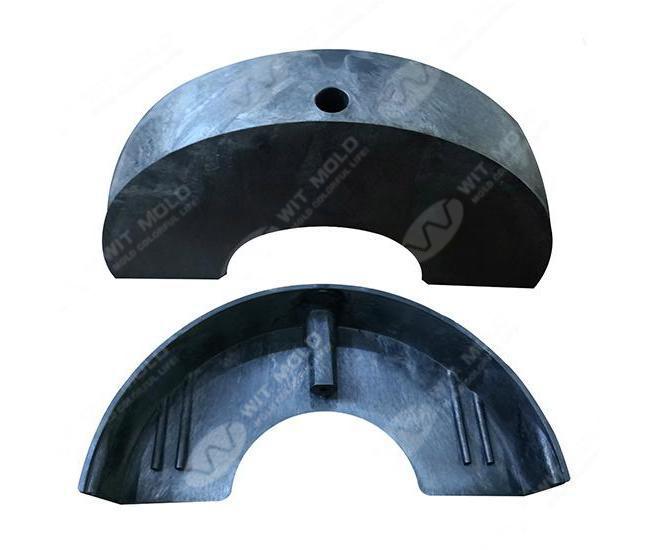
Structural Foam Molding and Injection Molding Differences
Structural foam molding and conventional injection molding both manufacture plastic components using molds, but their material behavior, filling methods, and processing requirements are different. These differences influence mold construction, part density, dimensional consistency, and production efficiency.
WIT Mold provides structural foam molding solutions for large plastic housings, equipment panels, and industrial components. Understanding how the two processes operate helps manufacturers determine which production method fits their product requirements.
1. Differences in the Molding Process
Conventional injection molding uses machine-generated pressure to inject molten plastic into a mold cavity. The material cools and solidifies into the required component shape.
Structural foam molding introduces a physical gas or chemical blowing agent into the polymer. During molding, gas expansion creates a cellular interior surrounded by a relatively dense outer surface.
| Process Stage | Structural Foam Molding | Conventional Injection Molding |
|---|---|---|
| Material Preparation | Resin combined with a foaming agent or gas | Thermoplastic resin prepared for melting |
| Cavity Filling | Injection assisted by gas expansion | Pressure-driven molten plastic filling |
| Internal Structure | Cellular core with dense outer skin | Generally solid structure |
| Pressure Control | Lower-pressure operation in suitable processes | Conventional injection and packing pressure |
| Cooling | Solidification with cellular development | Cooling of molten plastic |
| Finished Surface | May show swirl patterns | Often smoother as-molded appearance |
The choice of process depends on the component’s geometry, performance requirements, and acceptable surface finish.
2. Material Filling and Pressure Requirements
One significant difference involves how material fills the mold cavity.
Low-pressure structural foam molding uses gas expansion to help distribute material through the cavity. This can be particularly useful for large components with substantial wall thickness.
Conventional injection molding generally relies more heavily on injection and packing pressure to achieve complete filling.
Structural foam molding considerations:
- Lower cavity pressure may be suitable for large components.
- Material expansion helps form thick structural sections.
- Foaming behavior must be controlled to avoid irregular cellular distribution.
Conventional injection molding considerations:
- Injection pressure must accommodate material flow and cavity geometry.
- Packing pressure influences shrinkage and dimensional accuracy.
- Thin walls and detailed features require suitable filling conditions.
WIT Mold manufactures conventional plastic molds as well as structural foam molds for different product requirements.
3. Differences in Mold Design and Equipment
Structural foam molds and conventional injection molds require different engineering considerations.
| Design Factor | Structural Foam Mold | Conventional Injection Mold |
|---|---|---|
| Mold Pressure | Designed for the selected foaming process | Designed for conventional injection pressures |
| Gate Design | Supports filling and controlled foam development | Supports resin flow and packing |
| Venting | Must accommodate gases and displaced air | Removes trapped cavity air |
| Cooling | Influences cellular development and dimensions | Controls shrinkage and solidification |
| Equipment | Requires suitable foaming capability | Conventional injection molding equipment |
WIT Mold supports structural foam tooling using materials including ABS, PC, PP, and PS, with material selection based on the intended application.
Processing requirements should be confirmed for the specific resin grade and foaming system.
4. How Internal Structure Affects Finished Parts
The most visible technical difference is found inside the molded component.
Conventional injection molding generally produces solid plastic sections, while structural foam molding creates a cellular core.
This affects several product characteristics:
- Part Density: Cellular structures reduce density within foamed regions.
- Wall Thickness: Structural foam molding is particularly suited to relatively thick sections.
- Stiffness: Component geometry and the dense outer skin contribute to structural performance.
- Dimensional Stability: Lower-pressure molding may reduce certain residual stresses.
- Surface Appearance: Structural foam parts may need additional finishing for cosmetic applications.
The cellular core does not automatically make a component stronger than a solid injection molded part. Mechanical performance must be evaluated against the intended loads and operating conditions.
5. Production Cycle and Quality Control Differences
Both processes require controlled processing conditions and appropriate sample inspection.
However, structural foam molding introduces additional variables related to gas generation and cellular formation.
| Quality Factor | Structural Foam Molding Focus | Conventional Molding Focus |
|---|---|---|
| Filling Quality | Complete filling and consistent foam development | Complete cavity filling |
| Part Weight | Weight and density consistency | Part weight consistency |
| Dimensional Quality | Warpage and thick-section stability | Shrinkage and dimensional accuracy |
| Surface Quality | Swirl marks and cellular surface effects | Sink marks, flow lines, and flash |
| Process Stability | Gas expansion and cooling control | Injection, packing, and cooling control |
Structural foam molding is not necessarily faster than conventional injection molding. Cycle time depends on material, component thickness, cooling requirements, and processing equipment.
6. Which Process Fits Different Manufacturing Requirements?
| Product Requirement | Suitable Process |
|---|---|
| Large industrial machine housing | Structural foam molding may be suitable |
| Thick structural panel | Structural foam molding |
| Thin-wall electronic enclosure | Conventional injection molding |
| Small precision connector | Conventional injection molding |
| Large component requiring a cellular core | Structural foam molding |
| High-quality cosmetic plastic cover | Conventional molding may offer advantages |
WIT Mold supplies structural foam tooling for machine housings, plastic panels, commercial display components, and other large products.
The final selection should consider component dimensions, surface requirements, mechanical performance, and production quantities.
Frequently Asked Questions
Is structural foam molding a type of injection molding?
Yes. Structural foam molding is an injection molding-derived process that introduces gas or a blowing agent to create a cellular structure within the finished plastic component.
Does structural foam molding require different equipment?
It requires equipment or processing arrangements capable of introducing and controlling the foaming process. Some approaches use dedicated low-pressure systems, while others can use appropriately configured conventional injection molding machines.
Why does structural foam molding use lower pressure?
In low-pressure structural foam processes, gas expansion helps fill the cavity and compensate for shrinkage, reducing reliance on conventional high packing pressures.
Structural Foam Mold Manufacturing With WIT Mold
WIT Mold manufactures custom structural foam molds for large plastic products requiring thick structural sections, controlled cellular development, and suitable dimensional performance.
Our services cover mold engineering, tooling manufacturing, and project-specific sample verification. We develop tooling according to customer CAD drawings, resin specifications, product dimensions, and manufacturing requirements.
Contact WIT Mold to submit your project drawings and request a structural foam mold quotation.