
Choosing Between Standard and Precision Injection Molds
Choosing between standard and precision injection molds depends on how accurately a plastic component must be manufactured. While both can produce reliable plastic parts, unnecessary precision increases tooling costs, while insufficient accuracy may lead to assembly failures and production defects.
WIT Mold manufactures high precision injection molds and conventional plastic tooling for OEM projects. The right choice begins with understanding which product dimensions directly affect functionality and manufacturing performance.
1. Identify Critical Product Tolerances
Not every dimension requires the same level of accuracy. The first step is to distinguish functional tolerances from general dimensions.
Precision injection molds are particularly suitable for:
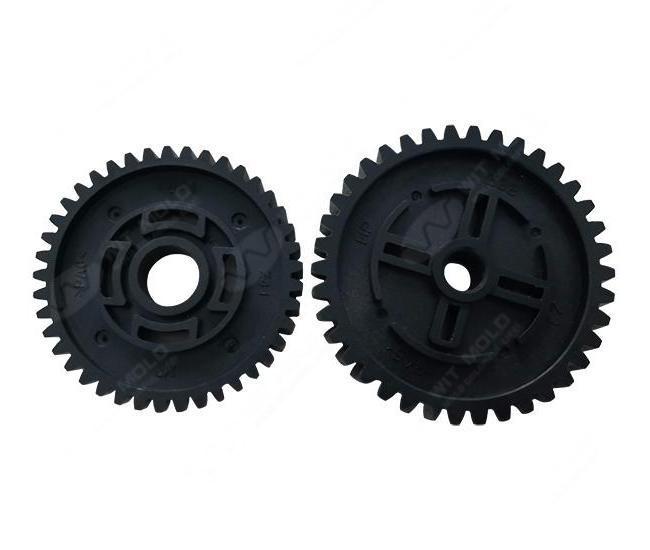
- Mechanical Components: Gears, moving parts, and precision fittings requiring controlled clearances.
- Electronic Connectors: Small openings and positioning features that must align accurately.
- Assembly Interfaces: Snap-fits, mounting holes, and components with demanding fitting requirements.
- Miniature Features: Small ribs, slots, and intricate structures requiring accurate mold machining.
For decorative housings, protective covers, and products with wider dimensional allowances, conventional molds may be sufficient.
2. Match Mold Accuracy to Product Requirements
Tooling accuracy should be determined by the finished product’s specifications rather than selecting the highest possible machining precision.
| Product Requirement | Standard Injection Mold | Precision Injection Mold |
|---|---|---|
| General Plastic Housings | Usually suitable | Only when critical features require it |
| Tight Assembly Tolerances | Depends on specified tolerances | Often preferred |
| Miniature Functional Features | Requires feasibility evaluation | Suitable for demanding geometries |
| Precision Gears | Depends on functional requirements | Often necessary |
| Decorative Plastic Components | Generally suitable | Usually unnecessary |
| Complex Mechanical Assemblies | Project-dependent | Often beneficial |
WIT Mold’s precision machining capabilities can achieve tolerances as tight as ±0.002 mm for applicable mold components. This refers to mold machining rather than guaranteed finished plastic part accuracy.
3. Evaluate Material and Dimensional Stability
Plastic materials behave differently during molding and cooling. Their shrinkage characteristics influence achievable dimensions and the suitability of a particular tooling approach.
Important considerations include:
- ABS: Suitable for many housings and functional parts requiring good appearance.
- PC: Requires attention to processing conditions and dimensional stability.
- PP: Shrinkage and warpage require consideration, especially for larger components.
- PA: Moisture absorption and dimensional changes can affect precision requirements.
- POM: Commonly selected for gears and mechanical components requiring dimensional consistency.
Even highly accurate tooling cannot compensate for unsuitable resin selection or uncontrolled molding conditions.
4. Compare Tooling Investment and Production Costs
Precision molds often involve higher manufacturing costs because of demanding machining, fitting, and inspection requirements.
However, the additional investment may be justified when dimensional deviations cause rejected parts or assembly problems.
| Cost Consideration | Standard Mold | Precision Mold |
|---|---|---|
| Initial Tooling Cost | Generally lower | Often higher |
| Machining Requirements | Appropriate to general specifications | More demanding accuracy |
| Inspection | Standard dimensional checks | Detailed critical-feature inspection |
| Maintenance | Depends on mold structure | May require closer monitoring of critical components |
| Best Economic Value | General-purpose products | Parts with demanding functional tolerances |
For products without strict dimensional requirements, conventional plastic molds can provide a practical balance between tooling investment and production performance.
5. Confirm Accuracy Through Sample Testing
The final tooling decision should consider whether the proposed mold can achieve the required finished-part dimensions under realistic production conditions.
Before approving a precision mold, confirm:
- Critical dimensions and their permitted tolerances.
- Measurement methods and acceptance criteria.
- Plastic material grade and shrinkage behavior.
- Assembly and functional testing requirements.
- Sample inspection and approval procedures.
WIT Mold follows a quality control process covering tooling design, machining, assembly, and inspection. Mold trials and sample verification help confirm whether the tooling meets agreed requirements.
6. Make the Final Decision Based on Product Risk
The most practical approach is to evaluate the consequences of dimensional variation.
Choose precision injection molds when small deviations could cause mechanical interference, connector misalignment, or assembly failure.
Choose standard molds when conventional tooling can consistently achieve the required dimensions without additional precision engineering.
In some projects, only specific mold features require tighter machining tolerances. Identifying these areas during engineering review can help avoid unnecessary manufacturing costs.
Frequently Asked Questions
Are precision injection molds always better than standard molds?
No. Precision molds are valuable when tight dimensional requirements justify their additional manufacturing complexity and cost. Standard molds remain effective for many conventional plastic products.
Can a standard mold produce accurate plastic parts?
Yes. Standard injection molds can manufacture accurate components when their tooling and processing capabilities meet the specified product tolerances.
What determines whether precision tooling is necessary?
Critical dimensions, part geometry, resin properties, functional requirements, and production consistency are the main factors.
Choose the Right Injection Mold With WIT Mold
WIT Mold provides conventional and high precision injection mold manufacturing for OEM customers. Since 2011, we have supported custom tooling projects involving automotive, electronics, household appliances, and industrial plastic components.
Our team evaluates product drawings, material specifications, tolerance requirements, and production quantities to develop suitable mold designs.
Contact WIT Mold to submit your CAD files and discuss the appropriate injection mold specifications for your next project.